 +91 98551-63355


.png)








Considering knee replacement surgery can raise practical questions for the whole family: how the decision is made, what happens on the day, how long hospital care may last, and what support is needed afterwards. This guide describes common stages in plain language. The exact sequence depends on the person's knee, health, clinician recommendations and the hospital's arrangements. The information is educational rather than a personal plan; the treating surgeon and care team should explain how it applies to an individual.
What the operation is intended to do
Knee replacement is an operation that removes damaged joint surfaces and replaces them with artificial components. It is often considered for advanced arthritis when pain and loss of function remain important despite appropriate non-surgical care. A total replacement addresses the main surfaces of the knee; in selected situations a partial replacement may be considered when damage is limited to one area and other structures are suitable. Neither label alone determines whether an operation is right. The surgeon evaluates symptoms, examination findings and imaging together.
Who may be assessed for surgery
A consultation may be useful when ongoing knee pain, stiffness or deformity interferes with walking, sleep, work or self-care. The clinician may ask whether you can climb stairs, rise from a chair, stand for meals or travel comfortably. They will review the length and pattern of symptoms and any prior injury or treatment. These difficulties are reasons to seek assessment, not a diagnosis or proof that replacement is needed. Other joints, the back or a medical condition can contribute to pain and need consideration.
Non-surgical options and deciding when
Before an operation, ask what non-surgical options remain relevant. Depending on the problem, these may include a tailored strengthening and mobility programme, physiotherapy, pacing activities, a walking aid, a brace or footwear advice. Pain medicines should be reviewed against kidney, stomach, heart and other health concerns. An injection may be discussed in selected cases; ask about its possible benefit, duration, limitations and side effects. Do not start, stop or combine medication on the basis of a general article. The clinician can help decide whether continued non-operative care is reasonable.
Timing is a shared decision. Consider how much pain affects daily life, whether treatments have helped, what support is available and what recovery commitments are realistic. Ask what may happen if you wait, whether symptoms could be reassessed later, and what changes should prompt an earlier visit. Some people choose to continue non-surgical care; others decide that the likely benefit of an operation is worth its risks and rehabilitation. There is no universal deadline or requirement to proceed after one appointment. You can take time to discuss the plan with family.
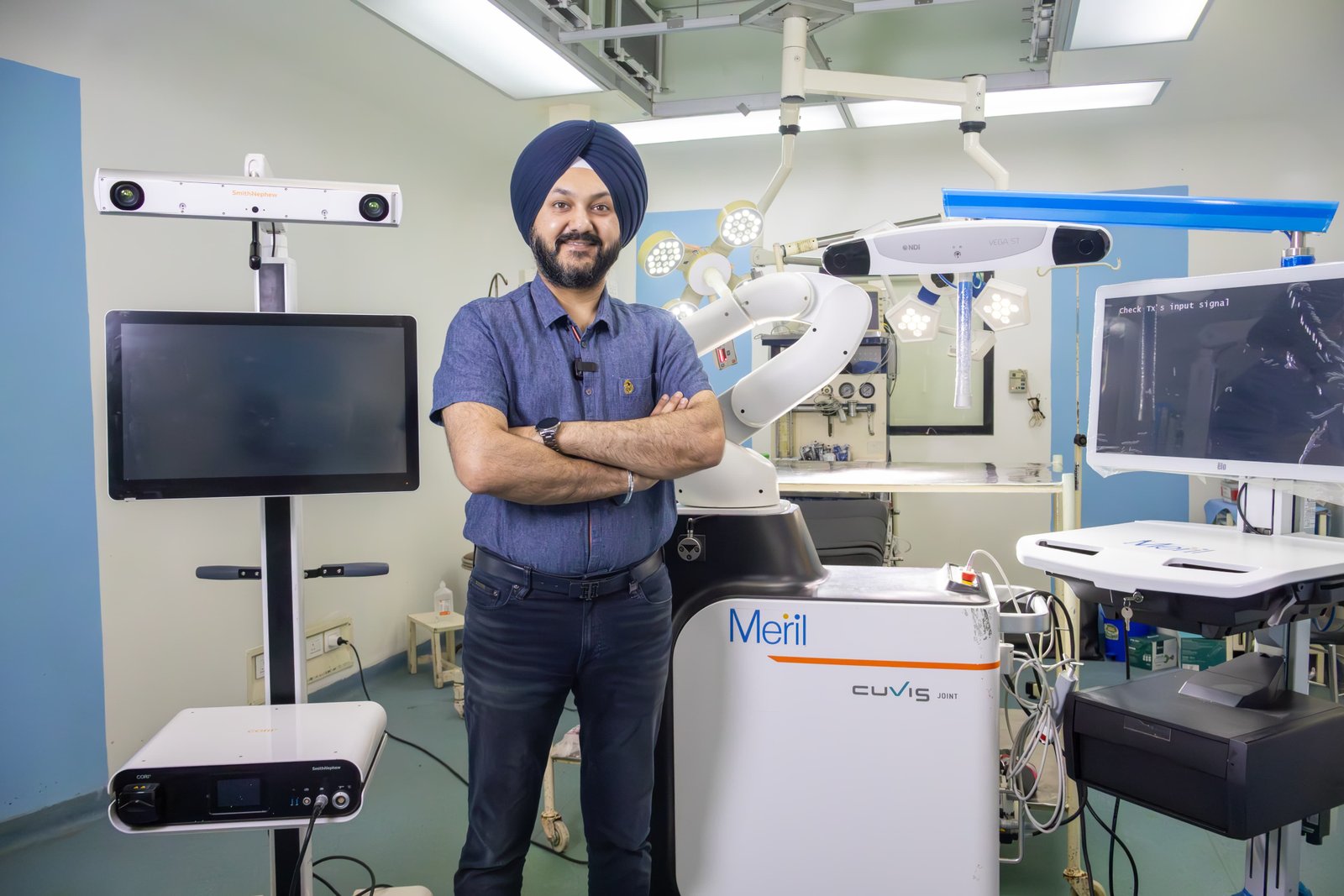
Clinic-reported profile
Dr. P.S. Nagpal is listed by the clinic as M.S (ORTHO), M.Ch. (USA), P.M.C. 36918 and Robotic Knee Replacement Surgeon. Clinic-reported experience figures are 3,000+ robotic surgeries, 13,000+ joint surgeries and 15+ years. These claims are presented as reported by the clinic, have not been independently verified here and should not be interpreted as an outcome guarantee. Nagpal Superspeciality Hospital, Mall Road, Bathinda 151001.
Consultation and investigations
At the consultation, the doctor reviews your symptoms, medical history, medicines, allergies, prior surgery and goals. Bring previous X-rays or scan reports if available, along with a medication list and details of other health conditions. The examination may include the knee's movement, alignment and stability, how you stand or walk, and nearby joints. Mention falls, recent injuries, fever, sudden swelling or a rapid change. If communication or mobility accommodations would help, tell the clinic when arranging the visit.
Standing or weight-bearing X-rays can show joint spaces and alignment. Additional imaging is considered only when it answers a clinical question or assists planning; not everyone needs an MRI or CT. Blood tests, an ECG or other medical reviews may be requested according to a person's health and the planned anaesthesia. Ask what each test is for, how results affect timing and whether you need to prepare. Share information about allergies, kidney problems, implanted devices and pregnancy possibility before investigations. Keep copies of reports for your own records.
Planning the procedure
If you and the surgeon decide to proceed, the team discusses total or partial replacement as appropriate, implant choices, the planned technique and how your anatomy affects the plan. The surgeon considers alignment, ligaments, movement and the condition of the rest of the knee. The exact plan may be refined during the operation if findings differ from expectations. Ask whether a different approach could be needed, what that would mean for consent and cost, and who will contact your family with updates.
Robotic-assisted systems may be used to support planning or guide selected parts of a procedure. They are tools operated within a surgical team; they do not replace the surgeon's judgement or guarantee precision, safety, pain relief or speed of recovery. Ask what technology is offered, why it might be considered in your case, and what limitations apply. Ask whether conventional surgery is also an option, whether additional imaging is required and whether technology changes the estimate. The important question is how the proposed plan relates to the patient's needs, not whether a device is described as advanced.
Anesthesia and pain-control discussion
An anaesthesia clinician typically reviews health history, previous anaesthesia, allergies, medicines and preferences. They can explain general and regional approaches and how pain may be managed around the operation. The choice depends on individual health, the procedure and clinical assessment. Share prior nausea, breathing issues, sleep apnoea, difficult airway, dental concerns or any family history that may matter. Tell the team about supplements and non-prescription medicines as well as prescribed drugs. Ask who will provide fasting instructions and which regular medicines to take on the day.
Risks and informed consent
Every operation involves risk. Topics to discuss for knee replacement include infection, bleeding, blood clots, stiffness, ongoing pain, wound problems, nerve or blood-vessel injury, fracture, anaesthesia complications, implant-related issues and further surgery. The level of risk differs with health, the operation and circumstances; no method removes all risk. Ask which risks are especially relevant to you, what measures the team uses to reduce them, what symptoms should prompt urgent attention and how complications are treated. A balanced explanation includes limits and uncertainties as well as potential benefits.
Informed consent means understanding the proposed procedure, why it is being considered, the main risks, alternatives and likely rehabilitation. Ask whether there is an option to wait or continue non-surgical care. Clarify which surgeon will perform the operation and what roles other clinicians have. It is fine to ask for an interpreter, written information or more time. If the plan changes during surgery, the team should have explained in advance what changes might be necessary and how consent covers them. Do not sign until you have had an opportunity to raise concerns.
Hospital day and length of stay
Length of stay is variable. Discharge depends on a person's health, pain control, safe movement, wound and medical checks, support at home and the local care pathway. The hospital can discuss a likely plan, but complications or a need for additional monitoring can change it. Before leaving, make sure you understand medication instructions, wound care, bathing, activity, follow-up timing and who to contact. Ask whether a walking aid, raised chair, toilet support or help with meals is useful. Plan transport that allows a safe, comfortable journey.
Rehabilitation after discharge
Rehabilitation begins when the treating team considers it appropriate and follows the surgeon's and therapist's directions. Early sessions may focus on bed mobility, transfers, standing and walking with assistance, followed by exercises to improve movement and strength. The exact schedule depends on the procedure, health, pain and access to therapy. Ask how to practise at home, how often, and which movements need caution. A caregiver can help with the environment and encouragement, but should not pull or force the operated leg.
Recovery is a process rather than a fixed finish date. Swelling, soreness, tiredness and sleep changes may come and go. Improvement in movement and confidence can vary, and progress may not be linear. Keep planned follow-up visits so the clinician can review healing, pain, range of motion and any concerns. Ask when driving, work, stairs, bathing, travel and specific household activities may be considered. Those decisions depend on safety, medications and functional recovery. Do not use another person's timeline as a personal target or stop therapy without asking.
Know the warning signs and contact instructions before discharge. The team should explain what symptoms warrant a call, an urgent assessment or emergency services. If the wound becomes increasingly red or drains, if fever develops or pain changes suddenly, seek advice as instructed rather than waiting for a routine appointment. Sudden breathlessness, chest pain or other severe symptoms require urgent medical attention. These examples do not replace the specific discharge instructions. If you are unsure, contact the treating service through its supplied channel.
Cost, insurance and family logistics
There is no universal fee for knee replacement surgery. A written estimate may depend on total or partial procedure, implant, technology, tests, medical complexity, length of stay, medicines and rehabilitation. Ask the clinic to itemise what is included and excluded, whether follow-up visits or therapy are separate, and how a longer admission or additional care may affect the bill. Check the estimate's validity period. Avoid relying on an advertised starting figure without confirming whether it applies to the proposed operation and your circumstances.
If using insurance, contact the insurer before scheduling to understand pre-authorisation, network status, required medical records, exclusions, co-payments and room limits. Ask the hospital billing team what documents it can supply and how a pending approval is handled. Keep written confirmation. Coverage is determined by the insurer, not this page or a clinic's estimate. Families should also account for travel, accommodation, caregiver time, home help and therapy transport. Outstation patients should discuss how many visits may be needed and when it is sensible to travel home.
Appointments in Bathinda
Nagpal Superspeciality Hospital is located on Mall Road, Bathinda 151001. For appointment availability and directions, call +91 98551 63355 or +91 98555 63355, or use the contact and appointment page. Bring available images, reports and a current medicines list. See also our pages about consulting a knee replacement doctor, questions for a surgeon and hospital care planning. Confirm current clinic arrangements directly before making travel plans.
Frequently asked questions
What happens before knee replacement surgery?
The care team reviews symptoms, examination, imaging, medical history, medicines and goals. If replacement is considered, the team discusses the proposed procedure, alternatives, risks, preparation and rehabilitation. Pre-operative checks depend on individual health and should be explained by the treating clinicians.
How long will I stay in hospital?
The stay varies according to health, mobility, pain management, monitoring needs and home support. The team can provide an expected pathway after assessment, but the actual discharge date may change. Ask what milestones and home arrangements are needed.
Will robotic surgery guarantee a better result?
No. Robotic assistance is a tool that may support planning or guidance in selected procedures. It does not guarantee pain relief, safety or recovery speed. Ask the surgeon what it changes in your case and what limitations remain.
How much does surgery cost?
Cost depends on the procedure, implant and technology choices, tests, health needs, stay and rehabilitation. Request a current written estimate with inclusions and exclusions, then check insurer requirements. This page does not quote a price.
What is rehabilitation like?
A physiotherapist and surgical team guide movement and strengthening at a pace suited to your recovery. Follow the specific home plan, keep follow-up appointments and ask before increasing activity. There is no guaranteed timetable that applies to everyone.
Planning surgery starts with an informed discussion.
Ask about an individual evaluation and the next practical step.
Call the clinicContact and appointments