 +91 98551-63355


.png)








People looking for a knee replacement doctor in Bathinda may be dealing with pain on stairs, stiffness after sitting, reduced walking distance or discomfort that interrupts sleep. Those symptoms can have different causes. A web page cannot determine which one applies to you, and an X-ray by itself cannot settle whether replacement is appropriate. An in-person assessment helps connect your history, examination, images and health circumstances. The purpose of an appointment is to make a plan together, which may involve continued non-surgical care, further testing, or discussing an operation.
What the doctor contributes to a care decision
A clinician who evaluates knee replacement considers more than the joint surface. They ask how symptoms began and changed, what activities are now difficult, which treatments you have tried and what you would like to do more comfortably. Examination may include movement, tenderness, stability and how you stand or walk. The clinician reviews available images and assesses other health conditions that could affect treatment. From this combined picture, the doctor can explain whether the knee appears to be a main source of symptoms and what uncertainty remains.
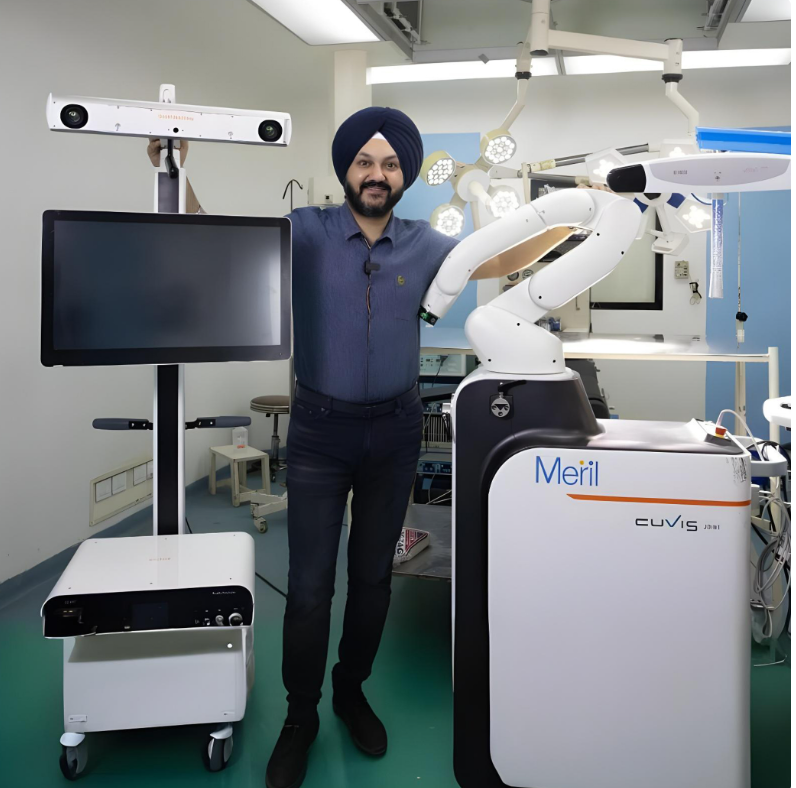
Clinic-reported doctor profile
Dr. P.S. Nagpal is listed by the clinic as M.S (ORTHO), M.Ch. (USA), P.M.C. 36918 and Robotic Knee Replacement Surgeon. The clinic reports 3,000+ robotic surgeries, 13,000+ joint surgeries and 15+ years' experience. These are clinic-reported profile figures and have not been independently verified here; they do not predict or guarantee a patient's outcome. Clinic: Nagpal Superspeciality Hospital, Mall Road, Bathinda 151001.
When an assessment may be helpful
Consider discussing an evaluation if pain or stiffness is persistent, recurring or interfering with routines despite reasonable self-care. People may find it harder to walk to local shops, manage stairs, rise from a chair, travel or keep up with work. Some notice swelling or a change in leg alignment. These features do not by themselves prove that joint replacement is needed. A doctor will consider your broader health, the pattern and severity of symptoms, examination and imaging, and whether other conditions might explain the problem.
Non-surgical approaches to ask about
Depending on the cause and severity of symptoms, non-operative care may include physiotherapy or an exercise programme that focuses on strength, movement and balance. Activity pacing can help people stay active without repeatedly provoking symptoms; a walking aid, supportive footwear or brace may be appropriate for some. Weight-management support may be relevant for some patients, but should be discussed without blame and in the context of overall health. Heat or cold may help some people manage temporary discomfort. These approaches should be adapted to your abilities and clinician's advice.
Medicines require an individual review. A doctor or pharmacist should know about prescription medicines, over-the-counter pain relievers, supplements, allergies, kidney or stomach problems, and other conditions before advising. Do not take a new medicine, combine products or stop a regular prescription based on general online content. Injections are sometimes discussed for particular problems. Ask which injection is being proposed, what evidence and likely duration of benefit apply to your situation, what side effects are possible, and whether it changes future planning. No treatment works in the same way for everyone.
How to prepare for an appointment
Bring a family member or caregiver if you would find that helpful. They may help remember details and discuss transport, household support or time away from work. With your permission, the doctor can include them in the conversation. Tell the clinic in advance if you need mobility assistance, an interpreter or another communication accommodation. You might ask: what is the likely explanation for my symptoms; what did the examination or X-ray show; what options fit my priorities; what would make surgery worth considering; and what warning signs should prompt earlier care?
Examination, imaging and possible tests
During a physical assessment, the doctor may look at knee alignment, swelling, skin, movement and stability, and may examine the hip, foot or back if symptoms could be related. They may ask you to stand or walk if it is safe and relevant. An examination is not a pass-or-fail test. Tell the clinician if a movement causes marked discomfort, and mention any recent change. A careful evaluation also checks for signs that the problem may not be ordinary wear-related arthritis.
X-rays are commonly used to review the bones, joint space and alignment. Weight-bearing images can be useful because they show how the joint looks while supporting the body's weight. Other imaging, such as MRI or CT, is not automatically necessary; it is considered when a clinical question needs answering or when a procedure is being planned. Blood tests may be considered if the history suggests inflammation, infection or another health issue. Ask why a test is recommended, what preparation it needs, and how its result could change your care.
How surgery is planned when appropriate
If your evaluation supports considering replacement, the doctor discusses whether a total or partial procedure is relevant. Total knee replacement replaces the main joint surfaces; partial replacement may be an option when disease is limited to one compartment and the remaining joint and ligaments meet clinical criteria. Not everyone qualifies for a partial procedure, and the final decision depends on examination and imaging. The doctor should explain why the recommended operation fits your case, what alternatives remain and what uncertainty exists.
Planning may involve review of alignment, implant options, medical fitness and the operating team's approach. Robotic-assisted planning or guidance may be available for selected cases. A robot is a tool used by a trained surgical team; it does not replace the doctor's assessment, choose treatment or promise a result. Ask how the technology would be used for you, whether it affects imaging or charges, and what would happen if the planned approach needs adjustment during surgery. You can ask whether a non-robotic approach is also reasonable and why.
Anesthesia, risks and your consent
An anaesthesia professional usually reviews your health and explains available approaches, which can include general or regional anaesthesia and a pain-control plan. The right method depends on health history, the operation and clinical judgement. Tell the team about prior nausea, difficult anaesthesia, allergies, sleep apnoea, loose teeth, supplements and all medicines. Ask when to stop eating and drinking, which medicines to take on the day, and who will provide instructions. Never make medication changes based only on a general page or advice from someone who does not know your case.
Risks to discuss include infection, bleeding, blood clots, stiffness, persistent pain, wound problems, nerve or blood-vessel injury, fracture, anaesthesia complications, implant wear or loosening, and a possible future procedure. The likelihood and impact differ by patient and are not fully eliminated by any technique. Ask which risks are most relevant to your medical history, what prevention steps the team uses, how complications are managed and what symptoms require urgent contact. The surgeon should also explain expected benefits and what replacement cannot reliably restore.
Hospital stay and early recovery
The length of a hospital stay varies. It can depend on health, pain control, mobility, wound checks, medical monitoring, home arrangements and local care plans. Some people need additional time or another level of rehabilitation. The care team will explain its likely pathway after it has assessed you, but a date cannot be guaranteed in advance. Ask what needs to be in place before discharge, whether a caregiver should accompany you, and how to arrange transport home. Confirm whether medicines, dressing supplies or mobility aids are included or need separate arrangement.
When clinically appropriate, a physiotherapist may guide early movement, safe transfers and walking with an aid. The pace follows the surgeon's instructions and your response, not a fixed timetable found online. Swelling, soreness, fatigue and interrupted sleep can occur during recovery. Ask how to elevate or ice the leg if advised, how to care for the wound, and which symptoms need a call. The team should provide contact details and clear instructions before you leave. Avoid trying to match a neighbour's recovery story; procedures and people differ.
Rehabilitation, review and day-to-day expectations
Rehabilitation helps restore movement, strength, balance and confidence over time. Your plan may include supervised sessions, exercises at home and scheduled clinical review. The therapist can modify activities as movement changes, pain fluctuates or other health needs arise. Consistency matters, but pushing through sharp pain or ignoring a new problem is not a substitute for professional advice. Ask how often exercises should be performed, how to tell normal effort from a concerning symptom, and what to do if access to a therapy session is delayed.
Follow-up appointments allow the doctor to assess healing, movement, pain, medicines and progress toward goals. Keep appointments and take a list of questions. The team may request imaging or adjust therapy according to findings. Improvement can be gradual, and setbacks such as fatigue or swelling may occur. A replacement can reduce joint-related symptoms for many people, but individual response varies. It does not guarantee that every activity will be possible or that pain from another source will disappear. Discuss a return to driving, work, prayer, stairs or travel with your clinician rather than relying on a universal date.
Cost and insurance questions
The total cost of care is individual and depends on the procedure, implant selection, technology, tests, health needs, hospital stay, medicines and rehabilitation. Ask the clinic for a current written estimate that names what is included and what is not. Clarify whether it covers surgeon and anaesthesia fees, room, investigations, implant, medicines, physiotherapy and follow-up. Ask how additional nights, medical complications or a change in the plan would affect charges. No fixed price is published on this page, and a general online figure may not match your circumstances.
For insurance, contact your insurer or employer benefits team before scheduling. Confirm whether the hospital and clinician are covered, whether pre-authorisation is needed, which documents are required, and what co-payment, deductible, waiting period or exclusions apply. The clinic may provide an estimate or medical records, but the insurer decides coverage. Keep copies of correspondence and ask how billing works if approval is pending. If you are travelling, add transport, accommodation and caregiver costs to your planning, and avoid committing to non-refundable arrangements before timing is confirmed by the care team.
Arranging a consultation in Bathinda
Nagpal Superspeciality Hospital is located at Mall Road, Bathinda 151001. To ask about appointment availability or directions, call +91 98551 63355 or +91 98555 63355, or visit the contact and appointment page. Bring available imaging and your medication list. You may read about knee replacement surgery and its care pathway, the surgeon consultation guide, and hospital planning questions before speaking with the team. Call to confirm current arrangements before travelling.
Frequently asked questions
What does a knee replacement doctor assess?
The doctor considers your symptom history, examination, activity limits, relevant imaging, general health, prior treatment and goals. Together, those details help identify a reasonable next step. A scan or pain description alone does not decide whether surgery is right for you.
Will a doctor recommend surgery at the first appointment?
Not necessarily. The first meeting may focus on understanding symptoms, reviewing reports and deciding whether additional tests or non-surgical care are appropriate. If replacement is discussed, you can ask questions, consider alternatives and take time before making a decision.
Can my family member come with me?
Yes. With your permission, a family member can help listen, take notes and talk through support at home. You remain central to decisions about your care, and you can also request part of the conversation privately.
Should I get an MRI before the visit?
Do not arrange a scan solely because a webpage suggests it. Bring prior reports if you have them. The doctor can recommend imaging only if it answers a clinical question and explain how the result could affect the plan.
Can I ask for another opinion?
Yes. A second opinion can help you understand a diagnosis, compare reasonable options or feel more confident about timing. Bring copies of your records and ask both clinicians to explain the reasons for their recommendations.
Prepare for a clear, individual conversation.
Ask the clinic what to bring and confirm appointment availability.
Call the clinicContact and appointments