 +91 98551-63355


.png)







Painless Knee Replacement Surgery in Punjab – The Nagpal Robotics Approach
One of the most common fears patients have about knee replacement surgery is pain — both during and after the procedure. At Nagpal Robotics in Bathinda, Punjab, Dr. Parampreet Singh Nagpal has prioritised creating the most comfortable, low-pain knee replacement experience possible through the combination of robotic precision and advanced multi-modal pain management protocols. The result is a painless knee replacement experience that consistently surprises patients who expected the worst.
This page explains exactly how Nagpal Robotics achieves minimal pain throughout the knee replacement journey — from surgery through to full recovery.
Is Knee Replacement Surgery Painful?
There are two distinct phases to address:
During Surgery: Zero Pain
Knee replacement surgery at Nagpal Robotics is performed under spinal anaesthesia (or general anaesthesia where preferred). Spinal anaesthesia completely numbs the body from the waist down for the duration of the procedure. The patient is comfortable and relaxed — typically awake but feeling nothing below the waist. There is absolutely no pain during the operation itself.
After Surgery: Well-Controlled and Manageable
Post-operative pain after knee replacement is a normal part of healing, but at Nagpal Robotics it is effectively managed through a multi-modal approach. Most patients are surprised by how much more comfortable they feel compared to their expectations — and compared to the chronic arthritis pain they were suffering before surgery.
How Robotic Surgery Makes Knee Replacement Less Painful
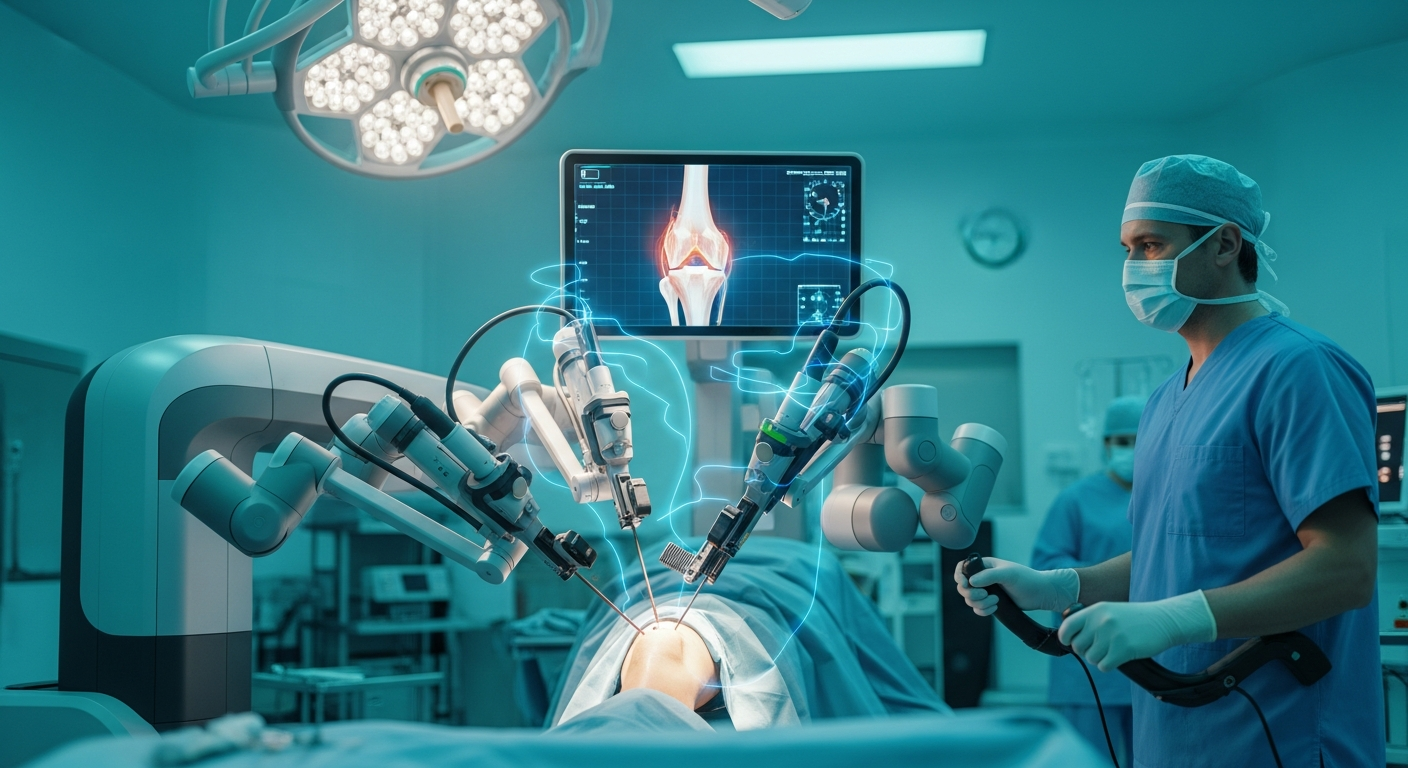
Robotic knee replacement is inherently less painful than conventional surgery because:
- Precision Bone Cuts: Robotic guidance ensures that bone is removed only exactly where needed. No excess cutting, no accidental damage to surrounding structures
- Minimal Soft Tissue Trauma: Robotic systems allow surgeons to work with greater precision through smaller surgical approaches — less muscle and tendon disruption
- Optimal Implant Alignment: A perfectly aligned implant places no abnormal stress on surrounding muscles and ligaments post-operatively — reducing pain during movement
- Reduced Inflammation: Less tissue trauma means less post-operative inflammatory response — which is a primary driver of pain
- Faster Healing: Less damaged tissue heals faster, shortening the duration of post-operative pain
Multi-Modal Pain Management at Nagpal Robotics
Dr. Nagpal uses a comprehensive multi-modal pain management protocol that combines multiple strategies to address pain from different angles — reducing the need for strong opioid medications which have side effects:
1. Spinal (or Epidural) Anaesthesia
Provides complete numbness during surgery. Long-acting local anaesthetics continue to provide pain relief for several hours after the operation ends.
2. Periarticular Injection (PAI)
At the end of surgery, Dr. Nagpal injects a carefully formulated cocktail of local anaesthetic, anti-inflammatory, and adrenaline directly around the knee joint. This provides 12–24 hours of excellent post-operative pain control — the critical early period when pain is typically worst.
3. Anti-Inflammatory Medications
Scheduled anti-inflammatory drugs (NSAIDs) reduce tissue inflammation — addressing one of the root causes of post-operative pain.
4. Oral Analgesics
Paracetamol and mild analgesics are used regularly in the initial days to maintain baseline pain control.
5. Ice Therapy
Ice packs applied to the knee in the first 48–72 hours after surgery dramatically reduce swelling and pain. Nagpal Robotics nurses guide patients and families in effective ice therapy techniques.
6. Early Physiotherapy
Counterintuitively, gentle movement and walking after surgery — guided by physiotherapists from Day 1 — actually reduces pain by preventing stiffness and improving circulation.
Patient Experience: What Pain Actually Feels Like After Knee Replacement
Patient testimonials from Nagpal Robotics consistently describe:
- "The pain after surgery was much less than I expected — certainly less than my arthritis pain was before"
- "I was walking with support the next morning. I thought I would be in bed for a week"
- "The pain was manageable with the tablets they gave me. By Day 3 I barely needed them"
- "I had robotic surgery — my neighbour had conventional surgery elsewhere. My recovery was much smoother"
Timeline of Pain After Robotic Knee Replacement at Nagpal Robotics
- Day 0–1: Protected by anaesthesia and PAI injection — minimal discomfort
- Days 1–3: Moderate pain managed effectively with medications; most patients walk with support
- Days 4–7: Pain reduces significantly; patients often report less pain than pre-surgery arthritis
- Weeks 2–4: Mild to moderate discomfort during rehabilitation exercises — normal and expected
- Month 2–3: Minimal pain; most patients are off regular painkillers
- Month 6+: Full pain-free function for the vast majority of patients
Afraid of Knee Replacement Pain? Come Meet Dr. Nagpal
Nagpal Robotics, Bathinda — painless, precise robotic knee replacement for Punjab patients.
Call: +91 98551-63355 Book AppointmentFrequently Asked Questions
Is knee replacement surgery painful?
The surgery itself is completely painless under anaesthesia. Post-operative pain is effectively managed with multi-modal protocols. Robotic precision minimises tissue trauma, making recovery more comfortable.
How does robotic surgery reduce knee replacement pain?
Robotic surgery causes less damage to surrounding muscles and tissues. This reduced trauma translates to less post-operative pain and faster recovery at Nagpal Robotics Bathinda.
What pain management is used after knee replacement at Nagpal Robotics?
Multi-modal pain management including periarticular injection, nerve blocks, anti-inflammatory medications, and oral analgesics — keeping patients comfortable while minimising opioid use.