Introduction
When knee replacement is being considered, patients often discover that there is more than one implant option. The names and materials can sound technical, and it is natural to wonder which one will last longest or allow the most activity. The answer is not simply to choose the most expensive implant or the one a friend received.
Implant selection depends on the patient’s anatomy, the condition of the knee, the surgical plan, activity needs, medical history and the surgeon’s assessment. The purpose of the consultation is to understand which options are suitable and why. This guide offers practical questions to discuss with your surgeon before making a decision about knee replacement in Bathinda or elsewhere in Punjab.
What Is a Knee Replacement Implant?
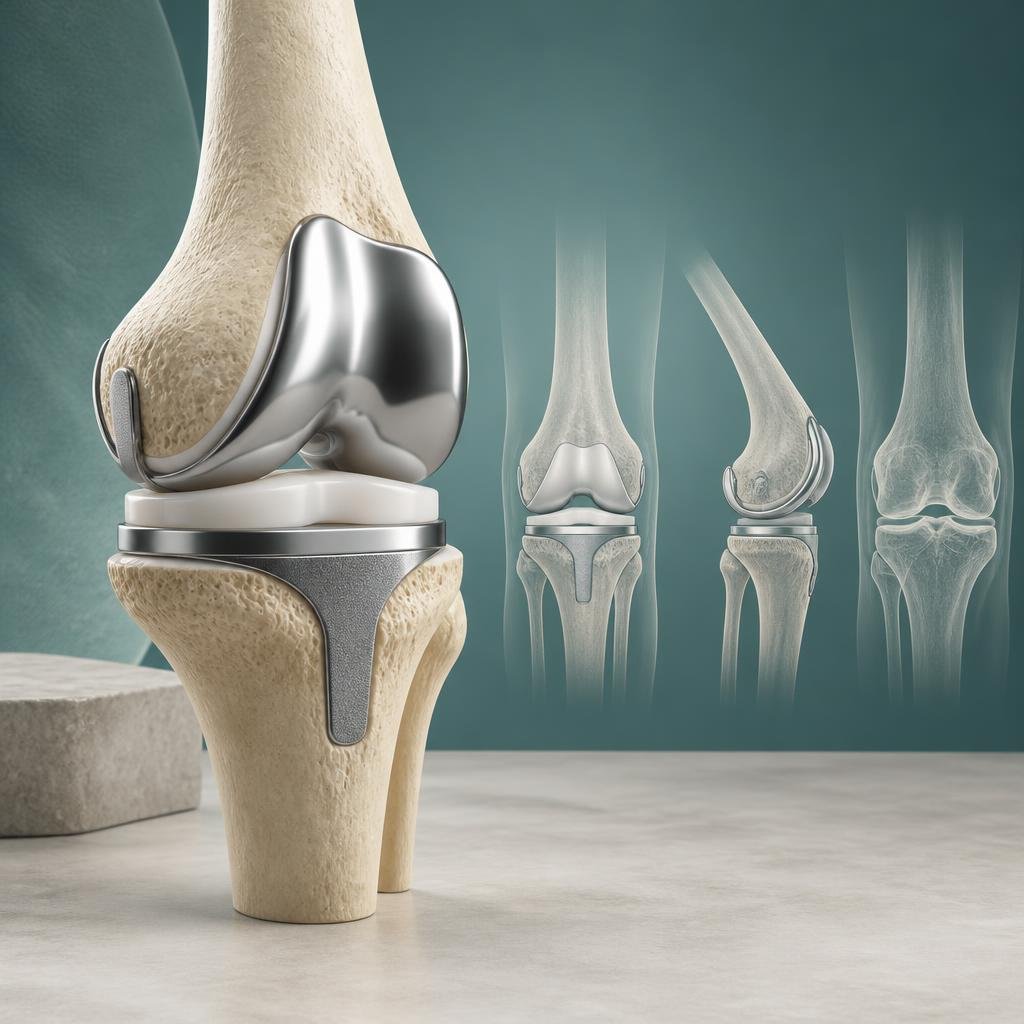
In knee replacement surgery, damaged joint surfaces are replaced with artificial components. In a total knee replacement, the main surfaces of the knee are replaced; in selected cases, a partial knee replacement may be possible when damage is limited to one part of the joint and other criteria are met.
Implant systems vary in design, size range, materials and how their components work together. The surgeon chooses a system that can be appropriately fitted to the patient’s anatomy and used for the planned operation. Implant choice is only one part of the result: accurate surgical technique, appropriate patient selection, infection prevention, rehabilitation and follow-up also matter.
No implant can guarantee a particular lifespan or outcome for every person. A responsible discussion should explain what is known, what may vary and what the patient can do to support recovery.
Question 1: Which Type of Knee Replacement Is Suitable for Me?
Start by asking whether total or partial knee replacement is being considered and why. The answer depends on where the joint damage is located, the condition of the ligaments, the extent of arthritis, the patient’s symptoms and imaging, and other clinical factors.
A partial replacement may be an option for some patients whose disease is limited to one compartment and whose knee meets the relevant criteria. A total replacement may be more appropriate when damage is more widespread. Neither choice should be made based only on a desire for a smaller incision or a shorter recovery.
Ask the surgeon to explain the findings from the examination and imaging in plain language. If a partial replacement is not suitable, ask what features make total replacement the better option for your knee.
Question 2: What Implant Options Are Available?
Different implant systems may be available at different hospitals. At Nagpal Robotics, the clinic’s website describes multiple implant options used with its joint replacement services. Ask the treating team which options are currently available, which are appropriate for your case and what practical differences matter.
Do not assume that every implant is suitable for every patient or that a longer list of options means one system is universally better. The choice must fit the surgical plan and the patient’s anatomy. The surgeon should be able to explain the reasoning without relying only on a brand name.
You can ask whether the proposed implant has a track record for the intended use, what information is available about its performance and how the team will document the implant details after surgery.
Question 3: What Materials Are Used?
Knee implants can combine different materials, such as metal alloys and specialised plastic bearing surfaces. The exact combination varies by implant system. If you have a known metal sensitivity or a previous reaction to an implant, tell the surgeon before the operation.
Ask which materials are planned and whether your medical history changes the options. Do not assume that a product described as “premium” or “advanced” is automatically the best choice for you. The material must be considered alongside implant design, fixation, surgical technique and your individual needs.
If you have concerns about allergies or implant materials, ask whether further evaluation is needed. Avoid self-diagnosing a metal allergy based only on jewellery irritation; the clinical team can help determine whether it is relevant.
Question 4: How Does My Anatomy Affect Implant Choice?
Knees differ in size, shape, alignment and the extent of bone and cartilage damage. The surgeon evaluates these features through examination and imaging, then selects an implant size and design suitable for the planned reconstruction. The goal is to restore appropriate joint mechanics while balancing the soft tissues and preserving or replacing structures as required.
Ask how your anatomy and the condition of the knee influence the choice. If you have a previous fracture, deformity, prior operation or an existing implant, mention it because it may affect planning. In complex cases, the surgeon may need additional information before making a final decision.
The most appropriate implant is not necessarily the same one used by a relative or neighbour. Their diagnosis, anatomy and operation may have been different.
Question 5: How Long Can the Implant Last?
Patients often ask how many years a knee implant will last. Implant survival varies with factors such as age, activity, body mechanics, medical conditions, implant design, surgical technique and complications. Research can provide estimates across groups of patients, but it cannot predict the exact lifespan for one individual.
Ask the surgeon what evidence is available for the proposed implant and what factors may affect durability in your case. Be cautious about claims that any implant will last a guaranteed number of years or will never need revision. Even a well-functioning implant can eventually wear or develop a problem.
Follow-up matters. If the knee develops new pain, swelling, instability or a change in function after replacement, seek medical advice rather than assuming the symptoms are simply part of ageing.
Question 6: Does Robotic Assistance Determine the Implant?
Robotic assistance is a tool used by the surgical team to support planning and execution of selected joint replacement procedures. It does not make the treatment decision independently, and it does not mean that one implant is right for everyone.
At Nagpal Robotics, the website describes the CUVIS and CORI robotic systems. Ask the surgeon how the available system is used in your particular operation and how the implant choice is made. The answer should focus on your diagnosis, anatomy and surgical plan rather than suggesting that technology removes all risks.
The surgeon remains responsible for clinical judgement, and outcomes depend on multiple factors, including the patient’s health and rehabilitation.
Question 7: What Are the Risks and Alternatives?
Ask the surgeon to explain the potential benefits and risks of the proposed operation and implant. Risks can include infection, blood clots, stiffness, persistent pain, instability, fracture, implant wear or loosening and the possibility of further surgery. The likelihood of each problem varies by patient and procedure.
Also ask whether non-surgical treatment remains reasonable. Depending on the severity of symptoms and joint damage, options may include tailored exercise or physiotherapy, activity changes, medicines or other treatments recommended by the clinician. These options may help symptoms but may not reverse advanced joint damage.
A good consultation makes space for questions and does not pressure you to decide before you understand the plan. For a non-urgent procedure, you can ask for written information or seek another opinion if you remain uncertain.
Question 8: What Will Recovery and Follow-Up Involve?
Implant selection should be discussed alongside the rehabilitation plan. Ask when you are likely to start walking with assistance, what physiotherapy will involve, how pain will be managed and when follow-up visits are planned. The details depend on the operation, general health and progress.
Ask how to care for the wound, which symptoms need urgent attention and who to contact with concerns. Clarify how long you may need help at home and when driving, work or more demanding activities may be considered. Do not use another patient’s timeline as a guarantee for your own recovery.
Keep a Record of the Implant
After surgery, ask for a discharge summary and operative record that identify the procedure and implant details where available. Keep these documents with your medical records. They may be useful if you move, see another clinician or require assessment in the future.
If you receive an implant card or product information, store it safely. Tell future healthcare professionals about your joint replacement when relevant. Do not rely only on memory for the date or type of operation.
A Practical Checklist for the Appointment
Before you leave the consultation, make sure you understand:
- Which type of knee replacement is being recommended and why.
- Which implant system is planned and whether alternatives are appropriate.
- What evidence and experience inform the recommendation.
- How your anatomy and medical history affect the choice.
- The main risks, likely benefits and limits of what can be predicted.
- What rehabilitation and follow-up will involve.
- What costs are included and whether implant-related charges are itemised.
- How you will receive the operation and implant records.
Frequently Asked Questions
Is the most expensive knee implant always the best?
No. Price alone does not establish suitability or expected outcome. Implant selection should be based on clinical needs, anatomy, evidence, the surgical plan and the surgeon’s assessment.
Can I choose my knee implant myself?
You can and should discuss options, but the surgeon must determine which systems are suitable for your anatomy and operation. Ask for a clear explanation of the recommendation.
Do all patients need a total knee replacement?
No. Some patients may be suitable for partial replacement, while others need total replacement. The decision depends on the pattern and extent of joint damage and other clinical factors.
Does robotic surgery guarantee a better result?
No surgical method can guarantee an individual outcome. Robotic systems may support planning and surgical execution in selected procedures, but the surgeon’s judgement, patient factors and rehabilitation also matter.
How do I know how long my implant will last?
No one can predict an exact lifespan for an individual. Ask about evidence for the proposed implant and factors that may affect durability.
Should I keep my implant details after surgery?
Yes. Keep your discharge summary and operative record, including implant details where available, with your other medical documents.
Conclusion
Knee implant selection is a clinical decision that should be explained clearly and tailored to the patient. Ask about the type of replacement, materials, available systems, risks, alternatives, expected recovery and long-term follow-up. At Nagpal Robotics, Mall Road, Bathinda, discuss your individual case with the orthopaedic team rather than choosing based only on brand names or other people’s experiences.